Sidecar Rides in Nova Scotia: Common Questions Answered
People new to sidecar touring tend to ask the same practical questions. The answers below are based on information from a former Nova Scotia sidecar tour operator’s archived FAQ, presented as general guidance. Practices differed between operators, and nothing here is an offer of rides or a booking.
What is a sidecar?
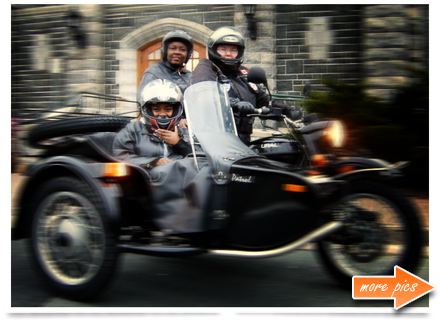
A sidecar is a one-wheeled attachment bolted to the side of a motorcycle, designed to carry a passenger or cargo. The idea is nearly as old as the motorcycle itself. North America’s last big period of popularity was the 1960s, and sidecars have been enjoying a revival, much like other fashions of that era.
Are sidecar rigs safe?
In Nova Scotia, rigs such as those built by Ural are licensed as motorcycles under the provincial Motor Vehicle Act, so they follow the same rules as any other motorised vehicle on provincial roads. No form of travel is risk-free, but touring operators generally rely on experienced riders with clean driving records who carry passengers carefully.
Who drives?
On a guided ride, an experienced, licensed driver handles the rig. Passengers can look at the scenery without having to concentrate on the road.
Are helmets required?
Yes. Motorcyclists in Nova Scotia must wear helmets, and tour operators typically supply them.
What should passengers wear?
Long trousers and closed shoes are sensible choices, and a jacket is a good idea because breezes off the ocean can be cool even in warm weather.
Is extra insurance needed?
Not for passengers. Motorists in the province must by law insure their vehicles, and that cover extends to the driver and passengers.
Is there a minimum age?
Nova Scotia sets no minimum age for motorcycle passengers. Young children could ride in a sidecar seat, but the operator preferred that anyone sitting behind the driver be at least ten years old and able to follow instructions.
How many people can ride?
A single rig carries two passengers at a time. A group wanting to share the experience would need to take turns, which can be done over one or several days. Weight limits also apply for safety. The former operator allowed up to 250 lb per passenger and 400 lb combined per rig, and could assign seats to balance the load.
What happens in bad weather?
Local humour holds that if you do not like the weather in Nova Scotia you should wait a moment, because it will change. As a rule of thumb, constant rain would cancel a ride, while light, occasional drizzle might not. The aim is comfort as well as safety.
When should plans be made?
Popular rides fill up, so it is sensible to arrange things well ahead of a visit.
Are other uses possible?
Sidecar rigs have also been used for special occasions such as proms, weddings and birthdays.
For routes in the region see the tour overview, and for more about the motorcycle read the Ural page.